
Agras T30 Battery and Charging System: Non-Stop Operation
25 May 2024
How the T30's fast charging station, heat-resistant battery chemistry and grid-adaptive charging let you work all day with just two batteries.
One factor in spraying productivity is how long the drone waits on the ground. Slow charging or too few batteries leave the crew idle. The Agras T30's battery and charging system is built to minimise that wait.
Note: The Agras T30 is a previous-generation DJI spraying drone. The current line-up includes the Agras T50, Agras T55 and Agras T70P. This article is for operators still flying the T30 or considering a used unit.
Non-Stop Work with Two Batteries
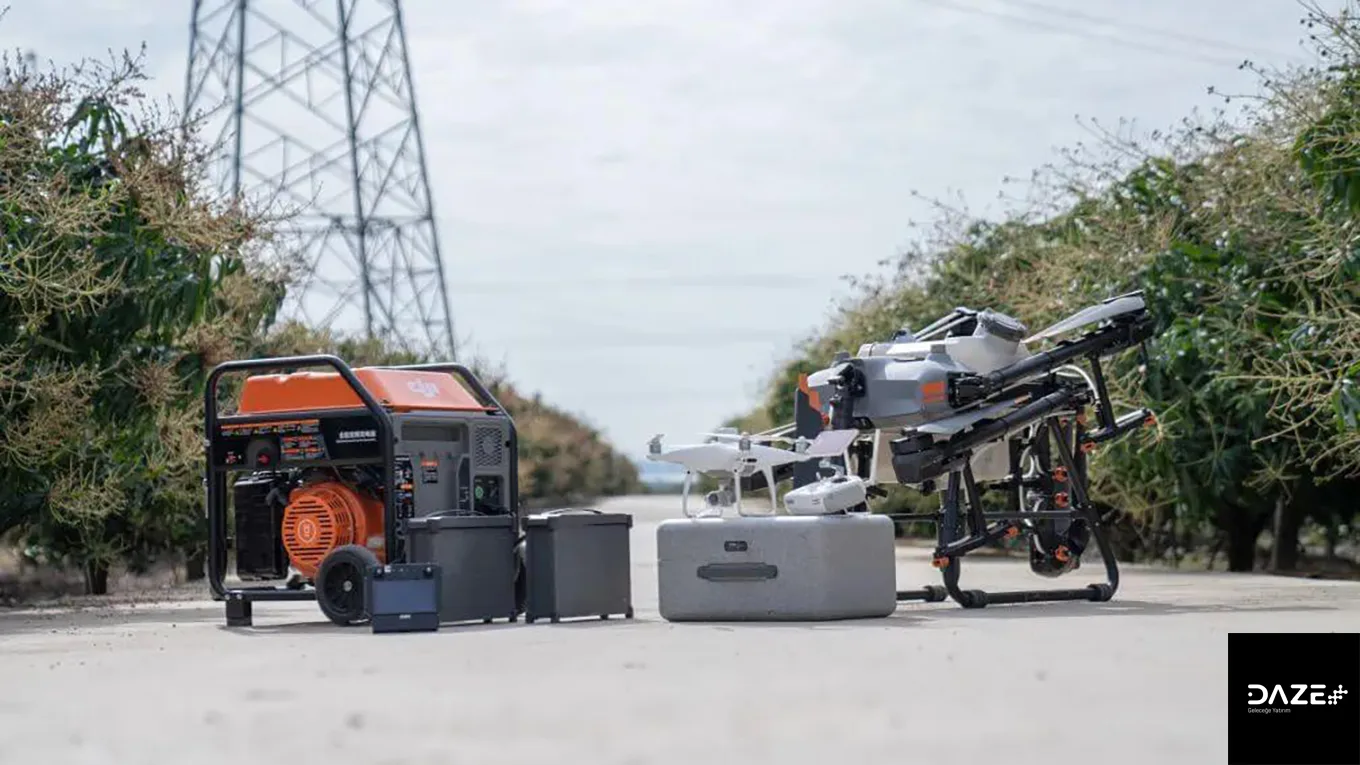
The T30's smart charging station charges a battery in about 10 minutes at 7200 W. Under standard conditions, two batteries and one station can be enough for continuous work, with one battery flying while the other charges. The system fits in the bed of a small pickup.
Heat-Resistant Chemistry
Summer field heat is a heavy load for batteries. The T30 battery uses a high-temperature electrolyte and cell chemistry. According to DJI, internal resistance is about 40% lower than the T20, meaning less heat at the same power.
Battery Life
The rated cycle count rose from about 600 on the T20 to 1,000 on the T30, directly lowering battery cost per season.
Grid-Adaptive Charging
7200 W can strain old or weak wiring. The T30 station detects the supply voltage and adjusts output automatically, so it charges safely indoors or in the field. In the field a suitably sized generator is usually used.
Extending Battery Life
- Do not charge a hot battery before it cools.
- Land before the battery drops below 20%.
- Keep connectors clean and dry.
- For long storage, keep batteries at 40-60% in a cool, dry place.
See our maintenance tips, the T30 spreading system article and the Agras T30 page.